One of the first questions patients ask at an orthodontic consultation is: how long is this going to take? It is a completely reasonable question. Orthodontic treatment is a commitment, and understanding the timeline upfront helps you plan, set expectations, and stay motivated throughout.
The straightforward answer is that braces treatment typically takes between 12 months and 3 years. The wide range exists because every patient’s teeth, jaw, and bite are different. Here is what actually determines your treatment length, and what you can realistically expect at each stage.
What Determines How Long Braces Take?
The Complexity of Your Case
This is the single biggest factor. A case involving a few mildly crowded teeth that only need minor repositioning will take considerably less time than a case involving significant bite misalignment, multiple rotations, or jaw development concerns. Patients with severe overbites, underbites, crossbites, or crowding across multiple teeth typically require longer treatment to achieve a stable, well-aligned result.
Your Age
Younger patients, particularly children and teenagers, tend to complete treatment faster. The jawbone is still developing, which means it responds more readily to the pressure applied by braces. Adult bone is denser and takes longer to remodel, which can extend treatment duration. This does not mean adults cannot achieve excellent results with braces — they absolutely can. It simply means expectations around timing should account for the biology involved.
The Type of Braces
Different types of braces apply force in different ways, which can influence how long treatment takes. Metal braces, ceramic braces, and lingual braces each have characteristics that affect efficiency for specific movements. Your orthodontist will recommend the type best suited to your case. Explore the full range of braces options at Orthoworx.
Patient Compliance
How well you look after your braces matters. Breaking brackets, missing appointments, and not following your orthodontist’s instructions can add months to your treatment time. This is within your control — consistent attendance and careful eating habits make a measurable difference to your overall timeline.
Typical Timelines by Case Type
| Case Type | Typical Duration | What It Involves |
|---|---|---|
| Simple | 12–18 months | Minor crowding, small gaps, few teeth needing repositioning |
| Moderate | 18–24 months | Several teeth repositioning, some bite correction — most common |
| Complex | 24–36 months | Significant bite discrepancy, severe crowding, surgical components |
Most patients fall into the moderate bracket. For complex cases involving both orthodontic and surgical components, book a consultation at Orthoworx to get an accurate picture of where your case sits.
What Happens at Each Stage of Braces Treatment?
Consultation and Planning
Before a single bracket is placed, your orthodontist will take photographs, X-rays, and study models of your teeth. This is the diagnostic phase, and it determines everything that follows. At Orthoworx, Dr Chan uses this information to develop a personalised treatment plan tailored to your specific needs. According to the Australian Society of Orthodontists, a thorough diagnostic process is fundamental to achieving a stable, long-lasting orthodontic outcome.
Fitting the Braces
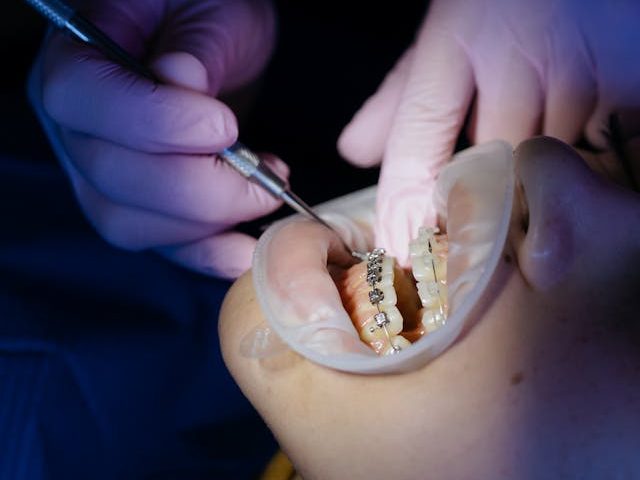
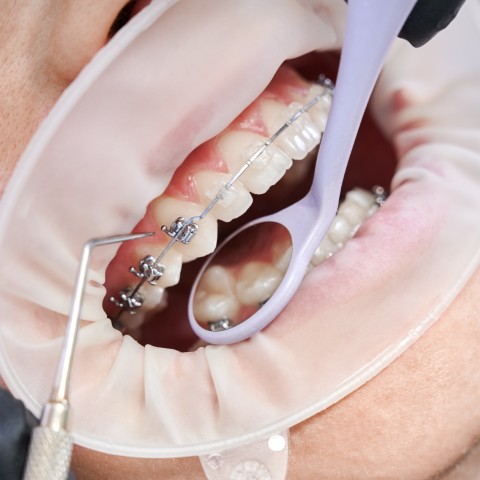
The appointment to fit braces typically takes one to two hours. Brackets are bonded to each tooth and the archwire is threaded through. You will feel pressure but no sharp pain. Some soreness in the days following is normal as your teeth begin to respond to the applied force.
Active Treatment Phase
This is the longest part. You attend check-up appointments roughly every six to eight weeks, where the archwire is adjusted or replaced to maintain pressure and guide movement. Over time, the position of your teeth changes and your bite comes into alignment. For children and teenagers, orthodontic treatment during the active growth phase can also help guide jaw development. Learn more about children’s orthodontics at Orthoworx.
Refinement
In the final stage of treatment, fine-tuning adjustments are made to achieve proper bite alignment and ideal tooth positioning. This stage can feel slow because the movements involved are smaller, but they are critical to the long-term stability of your result.
Retention
When your braces come off, treatment is not entirely over. You will be fitted with a retainer to maintain your new tooth positions. Teeth have a tendency to drift back toward their original positions if not held in place, so wearing your retainer as directed is essential. Learn more about teeth retainers at Orthoworx. Retainers may be fixed, removable, or a combination of both.
Can You Speed Up Braces Treatment?
There is no reliable way to significantly accelerate braces treatment without compromising safety or stability. Moving teeth too quickly risks damage to the roots, gums, and surrounding bone. What you can do is avoid extending your treatment unnecessarily: attend every appointment, look after your braces, follow dietary guidelines, and comply with any additional appliances your orthodontist recommends.
When Should You Start Orthodontic Treatment?
For children, the Australian Society of Orthodontists recommends an initial evaluation around age seven, when permanent teeth are beginning to emerge. Early assessment does not always mean immediate treatment, but it allows your orthodontist to identify concerns and time any intervention for maximum effectiveness.
Adults can start treatment at any age. The principles of tooth movement apply regardless of age, and there is no upper age limit for braces. Explore the full range of adult orthodontic treatment options at Orthoworx for both cosmetic and functional concerns.
Want to Know How Long Your Treatment Will Take?
The only way to get an accurate timeline is an assessment from a specialist orthodontist. Book a consultation at Orthoworx — Zetland or Chatswood.
Frequently Asked Questions
How long do braces take for adults? +
Adults typically take slightly longer than teenagers because adult bone is denser and slower to remodel. Most adult cases take 18 to 24 months, though simple cases can be completed in 12 to 18 months and complex cases can extend to 36 months or more.
Do braces take longer than Invisalign? +
For mild to moderate cases, treatment times are broadly similar. For complex cases, braces can be faster because they work around the clock without relying on patient compliance. Invisalign can take longer if aligners are not worn the required 20–22 hours per day.
Do I need a retainer after braces? +
Yes, without exception. Teeth will naturally drift back toward their original positions without a retainer. Wearing your retainer as directed — especially in the first year after treatment — is what protects your result over the long term. Most patients transition from full-time to night-only wear over time.
What can make braces take longer? +
Broken brackets, missed appointments, not following dietary guidelines, and poor oral hygiene can all add time to your treatment. Each broken bracket means time where that tooth is not being moved correctly. Consistent compliance with your orthodontist’s instructions is the most controllable factor in keeping your treatment on schedule.
How old should my child be when they first see an orthodontist? +
The Australian Society of Orthodontists recommends an initial evaluation around age seven. At this age, enough permanent teeth have emerged to assess developing concerns. Early evaluation does not always mean early treatment — in many cases it simply allows your orthodontist to monitor development and time any intervention for the best possible outcome.