It is one of the most common questions orthodontists get asked, and for good reason. Both braces and Invisalign straighten teeth. Both are proven treatments. But they work differently, suit different situations, and come with different day-to-day experiences. If you are trying to decide between the two, this guide will give you a clear, honest breakdown.
The Core Difference: Fixed Versus Removable
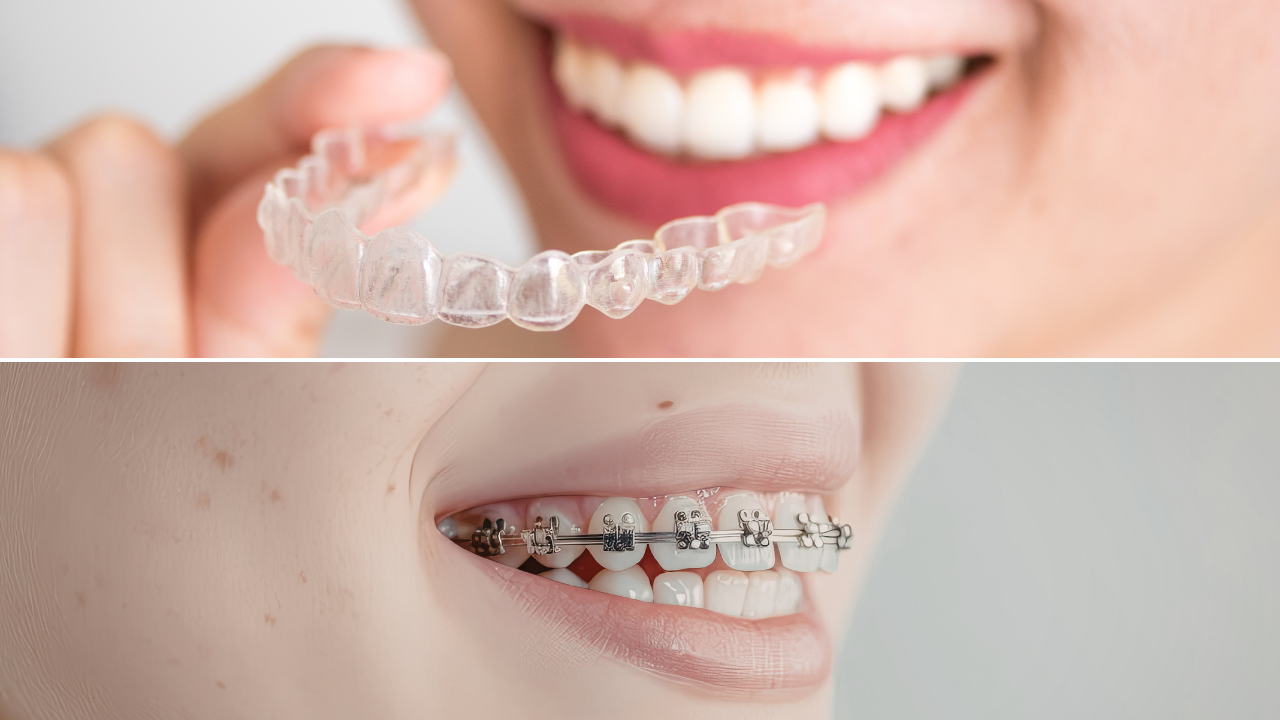
The most fundamental difference between braces and Invisalign is that braces are fixed to your teeth for the duration of treatment, while Invisalign aligners are removable. This single distinction creates a ripple of differences across every other aspect of the treatment experience.
With braces, brackets are bonded to each tooth and connected by an archwire. Your orthodontist adjusts the wire at regular appointments to apply pressure and shift your teeth progressively. You have no control over when the braces are on or off — which also means the treatment is working around the clock without any effort from you.
With Invisalign, you wear a series of custom-made clear plastic trays switched out roughly every two weeks. You take them out to eat, drink, brush and floss. The treatment works because you commit to wearing the aligners for 20 to 22 hours per day.
| Factor | Braces | Invisalign |
|---|---|---|
| Fixed or removable | Fixed | Removable |
| Case complexity | Mild to very complex | Mild to moderate |
| Aesthetics | Visible (metal/ceramic options) | Nearly invisible |
| Patient compliance | No action required | Must wear 20–22 hrs/day |
| Oral hygiene | More involved | Straightforward |
| Food restrictions | Yes — avoid hard/sticky foods | None |
Which One Is More Effective?
Braces Excel at Complex Cases
Traditional braces give orthodontists a higher level of precision and control over tooth movement, particularly for complex cases. Significant overbites, underbites, crossbites, severely crowded teeth, and situations where multiple teeth need to rotate or move in multiple directions all tend to respond better to braces. Visit the Orthoworx braces page for a detailed look at the types we offer.
Metal braces are also working continuously, which can mean treatment is completed faster for complex situations compared to Invisalign.
Invisalign Is Excellent for Mild to Moderate Concerns
Invisalign handles a wide range of cases very well, including crowded teeth, gapped teeth, and mild to moderate bite issues. The technology has improved significantly over the years, and an experienced Invisalign provider can treat cases that would once have required braces.
The difference in outcome between the two treatments for mild to moderate cases is minimal for most patients. What changes is the experience of getting there.
Aesthetics: Clear Winner Is Invisalign
If aesthetics during treatment are a priority, Invisalign is the clear choice. The aligners are transparent and far less visible than any type of braces. Most people in your day-to-day life will not notice you are in orthodontic treatment.
Ceramic Braces: A Discreet Middle Ground
Ceramic braces use tooth-coloured brackets that blend with the natural colour of your teeth, making them significantly less visible than metal braces. They are not invisible the way Invisalign is, but they offer a discreet option for patients who need the precision of fixed braces. Explore ceramic braces at Orthoworx for more detail.
Lingual Braces: Completely Hidden
Lingual braces are placed on the back surface of the teeth, making them completely invisible from the front. They require a more complex fitting process and are priced higher, but for patients where total invisibility is non-negotiable, they are worth considering. At Orthoworx, Dr Chan offers traditional metal, ceramic, and lingual braces alongside Invisalign, giving patients genuine options depending on their priorities and clinical needs.
Comfort: It Depends on What Kind of Discomfort
Both treatments involve a period of adjustment and can cause temporary soreness.
Braces Discomfort
With braces, discomfort typically occurs after each adjustment appointment when new pressure is applied. The brackets and wires can irritate the soft tissue inside the lips and cheeks, particularly in the early weeks. Orthodontic wax can help manage this.
Invisalign Discomfort
With Invisalign, you typically experience pressure when you switch to a new aligner tray. This settles within a day or two. There are no brackets or wires to irritate soft tissue, and because you can remove the aligners for eating, there are no food restrictions. Most patients find Invisalign more comfortable day to day.
Oral Hygiene: Invisalign Has a Clear Advantage
Brushing and flossing with braces is more involved. You need to clean around each bracket and under the archwire, which takes more time and requires tools like interdental brushes or a water flosser. If not done thoroughly, food and plaque can build up around the brackets.
With Invisalign, you simply remove the aligners, brush and floss as normal, clean the aligners, and put them back in. This ease of maintenance makes it significantly simpler to keep your teeth clean throughout treatment. The Australian Dental Association consistently emphasises that maintaining oral hygiene during orthodontic treatment significantly reduces the risk of decay and gum disease.
Cost: Both Are Investment-Level Decisions
The cost of braces versus Invisalign depends on the complexity of your case and the length of treatment. In general, simple Invisalign cases can be comparable in cost to traditional braces, while complex Invisalign cases may cost more. You can explore the full breakdown in our teeth braces cost guide.
Orthoworx offers interest-free payment plans to make both treatment types accessible. Orthodontic cover through private health extras can also reduce out-of-pocket costs for both options. Contact Orthoworx to discuss payment options.
Which Should You Choose?
The honest answer is that you should not decide based solely on what sounds more appealing. The right choice is the one your specialist orthodontist recommends after assessing your specific dental situation.
If you have a complex case, braces may achieve a better outcome. If your case is mild to moderate and discretion matters to you, Invisalign may be the right fit. In some cases, a combination of both produces the best result. The best way to find out is to book a consultation at Orthoworx and have Dr Chan assess your teeth, bite, and jaw before making any decision.
Not Sure Which Treatment Is Right for You?
Book a no-obligation consultation at Orthoworx. Dr Chan will assess your case and give you an honest, expert recommendation.
Frequently Asked Questions
Can Invisalign fix the same issues as braces? +
For mild to moderate alignment issues, yes. Invisalign handles crowding, gaps, and most bite concerns effectively. For very complex cases — severe rotations, significant jaw discrepancies, or multi-directional tooth movements — braces typically give the orthodontist more precise control.
Are braces faster than Invisalign? +
For complex cases, braces can be faster because they work continuously without relying on patient compliance. For mild to moderate cases, treatment times are comparable. Invisalign can take longer if the patient does not wear the aligners for the required 20–22 hours per day.
Do braces or Invisalign give better results? +
Both treatments deliver excellent results when used for the right case. The “better” result depends on your specific clinical situation. A specialist orthodontist will recommend whichever option is most appropriate for your teeth, bite, and jaw.
Is Invisalign more expensive than braces? +
Not necessarily. For simple to moderate cases, the cost can be comparable. Complex Invisalign cases can cost more. Orthoworx offers interest-free payment plans for both options. The best way to get an accurate comparison is to book a consultation and receive a personalised treatment plan with costs outlined.
What types of braces does Orthoworx offer? +
Orthoworx offers traditional metal braces, ceramic (tooth-coloured) braces, and lingual braces (placed on the back of the teeth). Dr Chan also provides Invisalign, giving patients genuine flexibility to choose the treatment best suited to their clinical needs and lifestyle preferences.
Can I switch from braces to Invisalign mid-treatment? +
In some cases, yes — particularly where an initial phase of treatment with braces is followed by Invisalign refinement, or vice versa. This is a clinical decision and depends heavily on where you are in treatment and what movements remain. Discuss this with your orthodontist before making any changes.