Lingual Braces in Sydney: What They Are, What They Cost, and Whether They Are Right for You
Lingual braces in Sydney are the most discreet fixed orthodontic option available. While ceramic braces use tooth-coloured brackets on the front of teeth, lingual braces take invisibility a step further – the brackets and wires are bonded entirely to the inner (lingual) surface of your teeth, facing your tongue. When you smile, talk, or laugh, nothing is visible from the outside.
At Orthoworx, Dr Eugene Chan offers lingual braces at both our Chatswood and Zetland clinics for patients who require complete concealment of their orthodontic treatment.
How Do Lingual Braces Work?
Lingual braces use exactly the same biomechanical principle as conventional braces. Custom-fabricated brackets are bonded to the tongue-facing surfaces of your teeth, and an archwire is threaded through them. As the wire exerts gentle, controlled force on the brackets, your teeth gradually move into the correct position.
The key difference from conventional braces is that each bracket must be individually customised to the unique inner surface of each tooth, which requires a laboratory fabrication stage using 3D imaging and precision milling. This increases both cost and lead time before treatment begins.

Lingual Braces Cost in Australia
| Treatment Type | Cost Range (AUD) | Notes |
|---|---|---|
| Lingual braces – full upper and lower | $10,000 – $18,000 | Most comprehensive option |
| Lingual braces – upper arch only | $6,000 – $10,000 | Popular for aesthetic focus |
| Ceramic braces – full treatment | $6,500 – $11,000 | Less invisible, lower cost |
| Invisalign – full treatment | $6,000 – $13,500 | Removable, less visible than metal |
| Metal braces – full treatment | $5,500 – $8,500 | Most affordable fixed option |
The higher cost of lingual braces reflects the bespoke laboratory fabrication, the technical complexity of placing brackets on the inner tooth surface, and the additional chair time required at each adjustment appointment.
Lingual Braces: Pros and Cons
Advantages
- Completely invisible from the front – no aesthetic compromise at all
- Fixed appliance – no compliance required, unlike Invisalign
- Effective for a broad range of complex malocclusions
- Suitable for patients with contact sports concerns (inner position protects the lips)
- Does not interfere with playing wind instruments at a professional level
Disadvantages
- Higher cost than all other orthodontic options
- Adjustment period required – most patients experience a temporary lisp for one to four weeks
- Tongue soreness in the early weeks, particularly around the lateral edges
- Cleaning is more complex than labial braces but manageable with correct technique
- Adjustment appointments take longer and require more specialist skill
Who Is a Good Candidate for Lingual Braces?
- Adults who cannot or will not wear a removable aligner (Invisalign) consistently
- Patients in professional roles where any visible orthodontic appliance is unacceptable
- Musicians, public speakers, actors, or broadcasters requiring complete concealment
- Patients with complex bite issues that are better managed with a fixed appliance
- Patients who have previously tried Invisalign and found compliance difficult
Lingual Braces vs Invisalign: Which Should You Choose?
| Feature | Lingual Braces | Invisalign |
|---|---|---|
| Visibility | Completely hidden | Nearly invisible |
| Compliance required | None – fixed appliance | Yes – 20–22 hrs/day |
| Complex cases | Excellent | Good (with limitations) |
| Speech adjustment | 1–4 weeks lisp possible | Minimal |
| Cost | $10,000 – $18,000 | $6,000 – $13,500 |
| Treatment duration | 18–30 months | 6–24 months |
| Emergency repair | Clinic visit required | Usually self-manageable |
What to Expect During Lingual Brace Treatment at Orthoworx
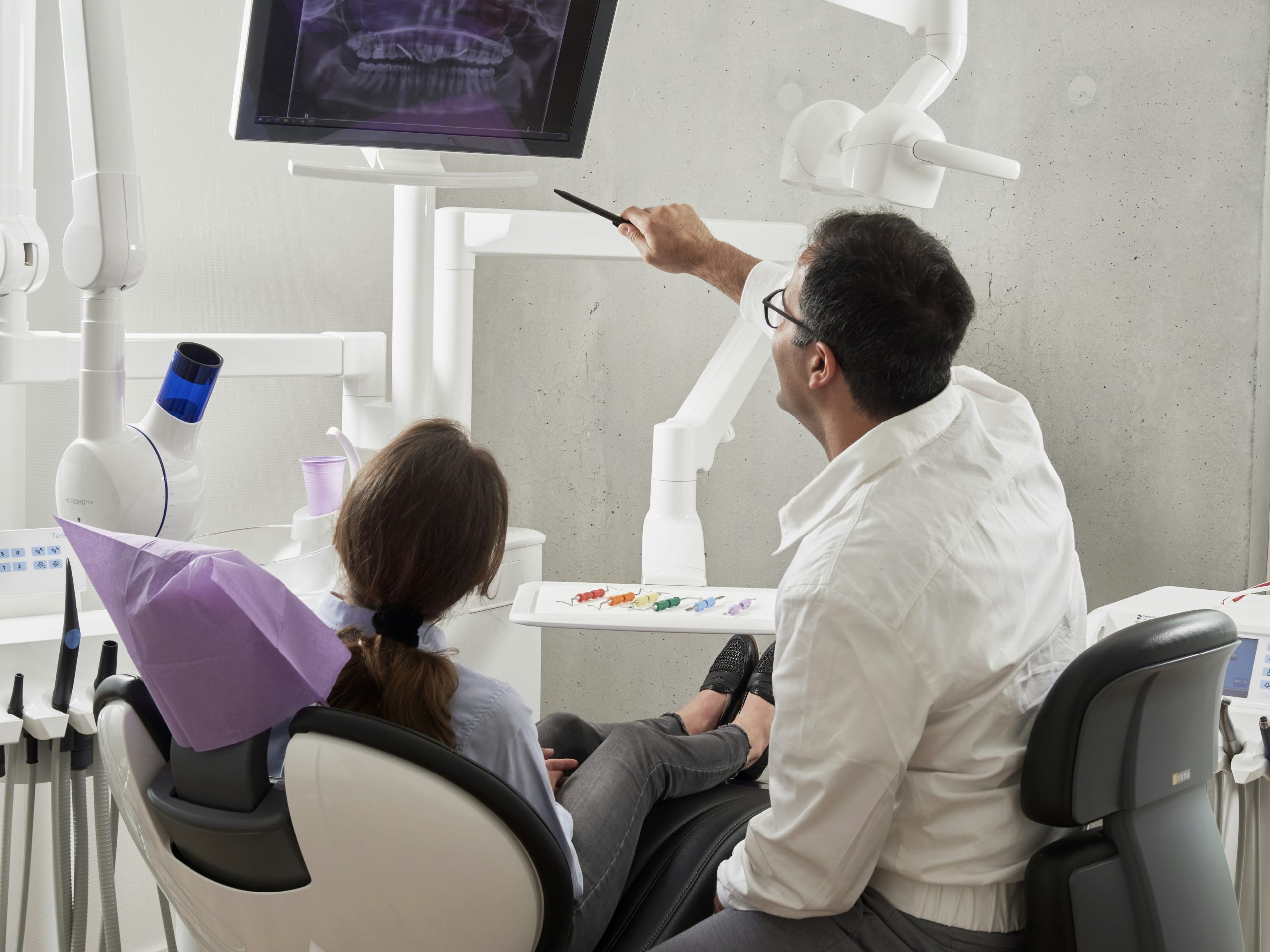
- Initial consultation: Dr Chan examines your bite, reviews X-rays and photos, and assesses whether lingual braces suit your case and goals.
- Digital impressions: A 3D scan of your teeth is taken and sent to the laboratory for custom bracket fabrication.
- Bracket fitting: Four to six weeks later, your custom brackets are bonded to the inner surfaces of your teeth using a precision transfer tray.
- Adjustment appointments: Every six to eight weeks, the archwire is adjusted to continue guiding tooth movement.
- Debond and retention: Once treatment is complete, brackets are removed and retainers are fitted.
How Long Do Lingual Braces Take?
Most lingual brace treatment at Orthoworx takes between 18 and 30 months, depending on case complexity. Mild cases may complete in as little as 12 months. Severe crowding or significant bite correction may extend to 30 months or beyond.
Related Reading
- Teeth Straightening Options in Sydney
- Does Invisalign Hurt?
- How Long Do Braces Take?
- What Happens at an Orthodontic Consultation?
- Adult Orthodontics at Orthoworx